What Is a Dangerous Heart Rate for a Child? Normal Ranges by Age and Warning Signs
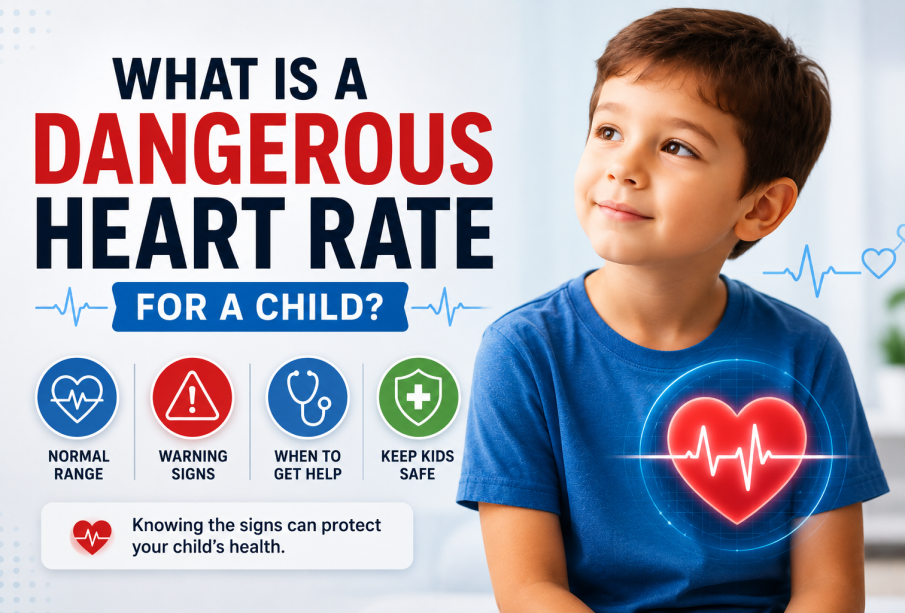
Parents asking what is a dangerous heart rate for a child need more than one cutoff number. A child’s normal pulse depends on age, whether the child is awake or asleep, recent activity, fever, pain, hydration, medicines, and how the child looks overall. A heart rate that is normal for a newborn can be unusually fast for a teenager.
The most concerning pattern is a rate far outside the expected range at rest with fainting, breathing difficulty, confusion, chest pain, blue or gray skin, severe weakness, or poor circulation. A very fast rhythm that starts and stops abruptly can also suggest an abnormal electrical rhythm.
| Call 911 now if: a child is unresponsive, is not breathing normally, has severe trouble breathing, turns blue or gray, faints and does not quickly recover, or has a very fast or very slow pulse with signs of shock or altered mental status. If the child has no pulse or is not breathing normally, follow emergency dispatcher instructions and begin CPR if you know how. |
Key Takeaways
- There is no single dangerous heart-rate number for every child because normal pulse changes substantially with age.
- Heart rate should be checked when the child is calm and resting, not immediately after running, crying, or becoming frightened.
- org lists awake heart rates that are naturally highest in newborns and infants and gradually fall toward adult ranges during adolescence.
- Fever, pain, dehydration, anxiety, crying, exercise, and some medicines can temporarily make a child’s pulse faster.
- The American Heart Association’s 2025 PALS tachycardia algorithm uses rates around 220 beats per minute in infants and 180 in children as clues that a very regular fast rhythm may be supraventricular tachycardia rather than ordinary sinus tachycardia.
- AHA pediatric bradycardia guidance treats a heart rate below 60 bpm with persistent cardiopulmonary compromise as a resuscitation emergency, not as a general screening cutoff for every healthy child.
- Symptoms often matter more than the number. Fainting, breathing difficulty, confusion, shock, chest pain, or poor color with an abnormal pulse needs urgent assessment.
What Is a Normal Resting Heart Rate for a Child?
Children normally have faster heart rates than adults, especially in infancy. The pulse gradually slows with age. These general ranges are most useful when the child is calm.
| Age | Typical awake heart rate | Typical sleeping heart rate |
| Newborn | 100 to 205 bpm | 90 to 160 bpm |
| Infant | 100 to 180 bpm | 90 to 160 bpm |
| 1 to 2 years | 98 to 140 bpm | 80 to 120 bpm |
| 3 to 5 years | 80 to 120 bpm | 65 to 100 bpm |
| 6 to 7 years | 75 to 118 bpm | 58 to 90 bpm |
| Adolescent | 60 to 100 bpm | 50 to 90 bpm |
The American Academy of Pediatrics provides these age-specific ranges in its HealthyChildren guide to fast, slow, and irregular heartbeats. A single measurement outside a range does not automatically mean a dangerous rhythm, especially if the child was active, upset, or sick.
When Is a Fast Heart Rate Dangerous?
A fast pulse is called tachycardia. Exercise, crying, fever, dehydration, pain, and fear can all cause sinus tachycardia, a normal response to increased demand.
A rhythm problem is more concerning when the rate is extremely fast, very regular, abrupt, or stays high after the child is calm. The 2025 AHA algorithm notes that sinus tachycardia is usually below 220 bpm in infants and below 180 bpm in children; rates around or above those levels can suggest SVT in the right pattern.
The current American Heart Association pediatric tachyarrhythmia algorithm emphasizes cardiopulmonary compromise, including altered mental status, shock, or hypotension, rather than using heart rate alone to decide how dangerous a rhythm is.
What Does SVT Look Like in a Child?
Supraventricular tachycardia, or SVT, is one of the most common abnormal fast rhythms in children. The heartbeat may feel extremely rapid and steady, with little beat-to-beat variation. Older children may describe pounding, racing, dizziness, chest discomfort, shortness of breath, or feeling as if they might faint.
Babies cannot describe palpitations, so prolonged SVT may show up as poor feeding, fast breathing, pallor, sweating, fussiness, or lethargy.
Can Fever Make a Child’s Heart Rate Look Dangerous?
Yes. Fever commonly raises heart rate, and pain, dehydration, or anxiety during illness can push it higher still.
The useful question is whether the heart rate begins to settle when fever, discomfort, and dehydration improve. A pulse that stays extremely high while the child is resting, or seems out of proportion to the illness, deserves medical advice.
What Is a Dangerous Low Heart Rate in a Child?
A slow heart rate is called bradycardia. Age and symptoms still matter: sleeping children and trained teenage athletes may have pulses below usual awake ranges without being ill.
Bradycardia becomes dangerous when blood flow and oxygen delivery are inadequate. In the AHA pediatric algorithm, persistent bradycardia with cardiopulmonary compromise calls for CPR when the rate is below 60 bpm.
This does not mean every pulse below 60 is an emergency. A well athletic teenager is very different from a pale, confused child with breathing difficulty and poor circulation.
Why Can a Child’s Heart Rate Become Too Slow?
- Low oxygen from a breathing problem.
- Severe hypothermia.
- Medication or toxin exposure.
- Heart block or another electrical conduction problem.
- Increased vagal tone.
- Serious brain injury or increased intracranial pressure.
- Normal athletic conditioning in an otherwise well older child or teenager.
What Symptoms Matter More Than the Number?
A heart-rate reading becomes much more concerning when it comes with evidence that the brain, lungs, or circulation are not getting what they need.
- Fainting or near-fainting.
- New confusion, extreme sleepiness, or difficulty waking.
- Severe shortness of breath or labored breathing.
- Blue, gray, or very pale lips or skin.
- Chest pain with a racing or irregular heartbeat.
- Cold, clammy skin or weak pulses.
- Poor feeding or unusual lethargy in an infant.
- A racing heartbeat that begins suddenly and does not settle with rest.
How Should You Check a Child’s Pulse?
Measure the pulse after several quiet minutes. The wrist is often easiest in an older child; in an infant, clinicians may use the upper arm or listen to the heart.
Count the beats for a full minute if the rhythm feels irregular. If it feels regular, counting for 30 seconds and doubling the number can provide a reasonable estimate. Write down the rate, whether the child was awake or asleep, the temperature, recent activity, and any symptoms.
If you are reading a medical note and see a shorthand comment that vital signs are normal, Boston Health Journal’s guide to the WNL medical abbreviation explains why ‘within normal limits’ always depends on the patient’s age and clinical context.
What About Smartwatches and Home Pulse Oximeters?
Consumer devices can spot patterns, but motion, poor contact, cold fingers, and device fit can distort readings. Confirm an unexpected alert manually when possible.
Do not delay emergency care to chase a perfect device reading when the child has serious symptoms.
Can Blood Pressure Help Show Whether the Heart Rate Is Dangerous?
Yes, but pediatric blood pressure is also age- and size-dependent. A fast or slow pulse with low blood pressure can signal poor circulation, and adult cuffs or adult cutoffs may mislead in small children.
For background on why blood-pressure numbers need context and careful measurement, see Boston Health Journal’s article on how to lower blood pressure quickly at home. The emergency thresholds discussed there are adult thresholds, not pediatric cutoffs.
When Should You Call the Pediatrician?
- The resting pulse is repeatedly outside the expected range for age without an obvious reason.
- The child reports repeated episodes of a sudden racing or pounding heartbeat.
- A smartwatch or monitor repeatedly records very fast or irregular episodes.
- The child has dizziness, exercise intolerance, or near-fainting.
- There is a family history of sudden unexplained death, inherited arrhythmia, or cardiomyopathy.
- The child takes a medicine that can affect heart rate or rhythm.
- The pulse remains unusually fast after fever, pain, anxiety, and dehydration have improved.
Common Questions About Dangerous Heart Rates in Children
Is 150 bpm dangerous for a child?
It depends on age and circumstances. A rate of 150 can occur normally in a young child who is active, crying, anxious, or febrile, but it is unusually high for a calm resting teenager. Symptoms and persistence matter.
Is 180 bpm dangerous for a child?
During vigorous exercise, some healthy older children and teenagers can briefly reach high rates. A sustained resting rate around 180 bpm, especially if it begins abruptly or comes with symptoms, should be evaluated for an abnormal rhythm such as SVT.
Is a heart rate below 60 dangerous for a child?
It can be, but not always. Athletic teenagers and sleeping children may have slow normal pulses. Below 60 becomes an emergency concern when it occurs with poor circulation, breathing problems, altered mental status, or shock.
When should I go to the ER for a child’s fast heartbeat?
Seek urgent care for a fast heartbeat with fainting, severe breathing difficulty, chest pain, blue or gray color, confusion, signs of shock, or a very rapid rhythm that stays high while the child is resting.
The Bottom Line
A dangerous heart rate for a child cannot be defined by one number. Compare the pulse with age, measure it at true rest, and pay close attention to symptoms.
Very fast, fixed rhythms that start abruptly can signal SVT, while an abnormally slow pulse with poor circulation can be equally serious. If a child is fainting, struggling to breathe, confused, blue or gray, poorly responsive, or showing signs of shock, treat the situation as an emergency rather than spending time trying to decide whether the exact heart-rate number is high enough to worry about.