
Is Sourdough Bread Good for You? Benefits, Nutrition, Blood Sugar, and Who Should Avoid It
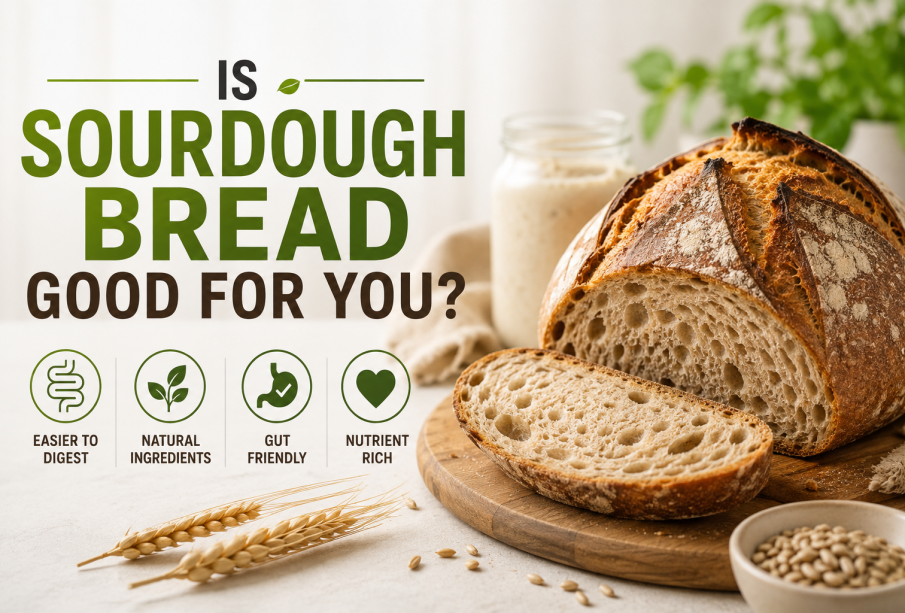
So, is sourdough bread good for you? For most people, it can be a nutritious bread choice, especially when it is made with whole-grain flour and traditionally fermented. Sourdough fermentation changes the dough in ways that may improve mineral availability, alter how quickly starch is digested, and make the bread easier for some people to tolerate. But sourdough is not automatically healthier than every other bread on the shelf.
The flour still matters. A long-fermented whole-grain sourdough can offer more fiber and micronutrients than a refined white loaf, while a white sourdough made mostly from refined flour may be nutritionally similar to ordinary white bread. The best choice depends on the ingredients, portion size, sodium, fiber, and your own health needs.
| Quick answer: Sourdough can be a healthy bread, but fermentation alone does not make a loaf a health food. Whole-grain sourdough usually offers the strongest nutritional profile. Traditional wheat sourdough still contains gluten and is not safe for people with celiac disease unless it is specifically certified gluten-free. |
Key Takeaways
- Traditional sourdough is fermented with a starter containing yeasts and lactic acid bacteria.
- Fermentation can reduce some phytate in dough, which may improve the availability of minerals such as iron, zinc, and magnesium.
- Some clinical studies show a lower post-meal glucose response with certain sourdough breads, but results are inconsistent and depend strongly on flour type and fermentation method.
- Whole-grain sourdough is generally more nutritious than white sourdough because it provides more fiber, vitamins, minerals, and intact grain components.
- Baked sourdough is not a probiotic food in the usual sense because the high heat of baking kills the live starter organisms.
- Regular wheat, rye, or barley sourdough is not safe for celiac disease simply because it has been fermented.
- A healthier loaf usually has whole grain near the top of the ingredient list, useful fiber, little added sugar, and reasonable sodium.
What Makes Sourdough Different From Regular Bread?
Most standard bread is leavened mainly with commercial baker’s yeast. Traditional sourdough uses a starter, a living mixture of flour and water that contains wild yeasts and lactic acid bacteria. During fermentation, these microorganisms produce acids and other compounds that create sourdough’s flavor, texture, and characteristic rise.
The fermentation process also changes parts of the flour. Acids can slow certain starch-digesting processes, and microbial enzymes can break down some phytate, a naturally occurring compound in grains that binds minerals. How much these changes matter nutritionally depends on fermentation time, flour, starter organisms, recipe, and baking method.
Is Sourdough More Nutritious Than White Bread?
Sometimes, but not simply because it is sourdough. If both loaves are made from refined white flour, their fiber and micronutrient profiles may be fairly similar. The biggest nutritional upgrade usually comes from choosing whole-grain sourdough.
| Bread type | Typical advantage | Main limitation |
| White sourdough | Fermentation may improve flavor and alter starch digestion | Usually lower in fiber than whole-grain bread |
| Whole-grain sourdough | Fiber plus fermentation-related changes | Can still be calorie-dense and high in sodium |
| 100% whole-wheat bread | Reliable fiber and whole-grain nutrients | Not all products are long fermented |
| Refined white sandwich bread | Soft texture and easy availability | Usually lower in fiber and more rapidly digested |
For a broader comparison of bread types, Boston Health Journal’s guide to the healthiest bread choices explains how whole wheat, rye, sprouted grain, sourdough, white, and gluten-free breads compare.
Does Sourdough Have a Lower Glycemic Impact?
It can, but the answer is not universal. Some trials have found a smaller rise in blood glucose after certain sourdough breads compared with industrially fermented bread or glucose. Whole-grain sourdough appears more likely to perform well than refined sourdough, and the structure of the loaf matters too.
A systematic review of clinical trials found potential benefits for post-meal glucose, satiety, and gastrointestinal comfort in some studies, but concluded that the evidence was too inconsistent to say sourdough fermentation by itself reliably improves health outcomes.
A systematic review indexed by PubMed found promising results in some clinical trials but emphasized that flour type, starter microbes, fermentation conditions, and recipes varied too much for a simple health claim.
Is Sourdough Better for Digestion?
Some people say sourdough feels easier to digest, and there are plausible reasons for that. Fermentation partially breaks down carbohydrates and proteins in the dough and can reduce certain fermentable compounds. That may improve tolerance for some people with sensitive digestion.
However, this does not mean sourdough treats IBS or that every person with digestive symptoms will tolerate it better. Commercial loaves vary widely, and a short-fermented supermarket sourdough may behave differently from a long-fermented bakery loaf.
Does Sourdough Contain Probiotics?
Not after baking in the way yogurt or kefir can. The starter contains live yeasts and lactic acid bacteria before the loaf goes into the oven, but baking temperatures kill those microorganisms.
Sourdough may still contain fermentation products and changes in the grain that influence digestibility, but calling baked sourdough a live probiotic food is misleading. Its gut-health value is more likely to come from fermentation-related changes and, when made with whole grains, dietary fiber.
Can Sourdough Improve Mineral Absorption?
Fermentation can reduce phytate, a compound concentrated in grains and seeds that can bind minerals. Lower phytate may make iron, zinc, magnesium, and other minerals more available for absorption.
This is another reason whole-grain sourdough can be appealing: whole grains start with more fiber and minerals, and fermentation may improve access to some of those nutrients. The effect should be viewed as a nutritional advantage, not as treatment for a mineral deficiency.
Is Sourdough Good for Weight Loss?
Sourdough is not a weight-loss food by itself. Bread calories still count, and a large slice topped with butter, cheese, or sweet spreads can become a substantial part of a meal.
What may help with weight management is choosing a high-fiber loaf and building a meal that is satisfying enough to prevent constant snacking. Pairing bread with protein and unsaturated fat can make it more filling than eating plain bread alone.
For example, a slice of whole-grain sourdough with natural peanut butter can add protein and unsaturated fat. Boston Health Journal’s article on peanut butter and cholesterol explains why the type of fat and portion size matter more than the fact that peanut butter is calorie-dense.
Is Sourdough Safe for Celiac Disease?
Ordinary wheat sourdough is not safe for people with celiac disease. Fermentation can partially break down gluten proteins, but typical sourdough fermentation does not remove enough gluten to make standard wheat bread celiac-safe.
People with celiac disease need bread made from gluten-free ingredients and protected from cross-contact. A sour taste or long fermentation is not enough.
The NIDDK celiac disease nutrition guidance states that people with celiac disease must avoid gluten from wheat, barley, and rye and should use appropriately labeled gluten-free foods.
What About Gluten Sensitivity?
People who do not have celiac disease but report sensitivity to wheat or gluten sometimes tolerate long-fermented sourdough better. That may be related to changes in fermentable carbohydrates rather than gluten alone.
If bread repeatedly causes bloating, pain, diarrhea, or other symptoms, do not use sourdough tolerance as a self-test for celiac disease. Celiac testing is most accurate while you are still eating gluten, so talk with a clinician before starting a strict gluten-free diet.
How Do You Pick a Healthier Sourdough Loaf?
- Check the first ingredient. Whole-wheat or another whole-grain flour gives you more fiber than refined flour.
- Compare fiber. A loaf with at least a few grams per serving is generally more filling than a low-fiber white loaf.
- Check sodium. Bread can contribute a surprising amount of sodium across several slices.
- Look for little added sugar. A sourdough loaf does not need to be sweet.
- Read the ingredient list. Flour, water, salt, and starter are traditional basics, although some commercial loaves use additional ingredients.
- Do not rely on the word ‘sourdough’ alone. Fermentation method and flour quality vary widely between products.
Is Homemade Sourdough Healthier?
Homemade sourdough gives you control over the flour, salt, fermentation time, and portion size, which can make it easier to build a nutrient-dense loaf. Using whole-grain flour or mixing whole and refined flours can raise fiber while keeping the texture you prefer.
Still, homemade bread is not automatically lower in calories or sodium. Weighing ingredients and using a reliable recipe matters if you are tracking nutrition closely.
Common Questions About Sourdough Bread
Can you eat sourdough every day?
Yes, many people can. The better question is whether the loaf fits your overall grain, fiber, calorie, and sodium needs. Whole-grain sourdough is generally a stronger everyday option than refined white sourdough.
Is sourdough healthier than whole-wheat bread?
Not automatically. A 100% whole-wheat loaf can provide more fiber than white sourdough. Whole-grain sourdough combines the advantages of whole grains with fermentation.
Does sourdough spike blood sugar?
It can still raise blood glucose because it contains starch. Some sourdough breads produce a lower post-meal response than standard bread, but flour type, portion size, and the rest of the meal matter.
Is sourdough good for your gut?
It may be easier to digest for some people, and whole-grain versions provide fiber. Baked sourdough is not a live probiotic food because baking kills the starter organisms.
Is sourdough anti-inflammatory?
There is not strong evidence that ordinary sourdough bread acts as a specific anti-inflammatory treatment. Its health value is better judged by grain quality, fiber, overall diet, and individual tolerance.
Is sourdough gluten-free?
Traditional wheat, rye, and barley sourdough is not gluten-free. People with celiac disease need a sourdough specifically made and labeled to meet gluten-free standards.
The Bottom Line
Sourdough bread can fit well into a healthy diet. Fermentation may improve mineral availability, change starch digestion, and make the bread easier for some people to tolerate, but the flour and overall recipe still matter. For most people, whole-grain sourdough with useful fiber, modest sodium, and little added sugar is the strongest choice. If you have celiac disease, standard wheat sourdough is not safe.


